FIGURE SKATE TECH SERVICES ━━━━━━━━━━━━
QUESTIONS ABOUT FIGURE SKATING? START HERE.
Straight answers about figure skating, equipment, sharpening, EDEA fitting, coaching and more — backed by 50 years in figure skating.
SHARPENING
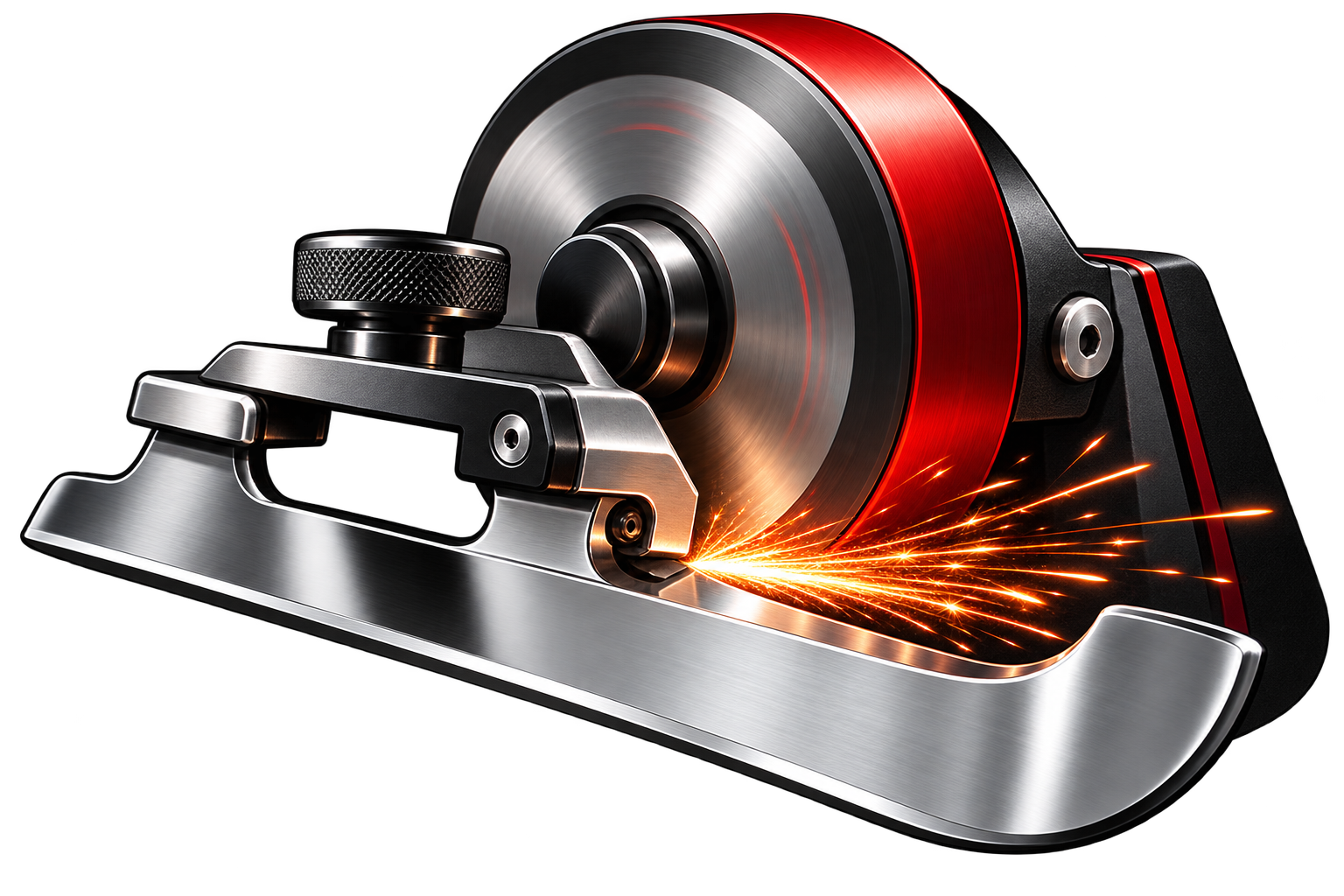
Edges, frequency, hollow & blade care
BOOTS & FIT
EDEA, sizing, shaping & adjustments
BLADES
Selection, mounting, alignment & performance
COACHING
Lessons, technique & training
SKATING
Equipment advice & general skating question
-
How often should I sharpen my figure skates?
A good guideline is every 20–30 hours of skating, depending on your training schedule, ice conditions, blade type and personal preference. Competitive skaters may need sharpening approximately every two weeks, while recreational skaters may go several months.
The goal is consistency. As blades become dull, skaters begin compensating for changes in edge grip, which can affect technique and performance.
What is a radius of hollow (ROH)?
The radius of hollow determines the curvature of the groove between the blade's two edges. A deeper hollow provides more bite into the ice, while a shallower hollow generally allows more glide and easier release.
The correct hollow depends on the skater's preferences, skating style and ice conditions.
Can a bad sharpening damage my blades?
Absolutely. Improper sharpening can alter the blade's rocker, create uneven edges or remove excessive material. In extreme cases, a blade can be permanently damaged.
Proper sharpening should maintain consistent edges while preserving the blade's original profile and performance characteristics.
How should I care for my blades between sharpenings?
Use hard guards when walking off the ice, and keep them free of dirt and debris. After skating, thoroughly dry your blades and soles before putting on soft soakers for transportation.
Once home, remove your skates from the bag and take off the soakers so everything can air-dry. Never leave wet blades inside hard guards.
How much does figure skate sharpening cost?
Professional figure skate sharpening is $30 per pair. New blades purchased through Dan Hollander Skating Services include their initial sharpening at no additional charge.
Germantown drop-off appointments can be booked online. Contact Dan directly for other arrangements.
-
How do I know if my figure skates fit correctly?
A properly fitted figure skate should hold your foot securely, particularly around the heel, without excessive movement or painful pressure points. Your toes should have adequate room, but your foot should not slide around inside the boot.
Three things are essential to a good skating experience: proper fit, appropriate ankle support and correctly sharpened blades.
When should I stop using rental skates and purchase my own?
Rental skates are perfectly reasonable when you're trying skating for the first time. However, once you know you enjoy skating and plan to continue, purchasing properly fitted skates can make a significant difference.
Your own skates provide more consistent support, fit and blade performance. As you progress toward spins and jumps, properly fitted equipment becomes increasingly important.
Should I purchase the stiffest boots available?
No. A more expensive or stiffer boot isn't necessarily better.
Boot stiffness should correspond to the skater's weight, strength, skating level and the elements being performed. A boot that's too soft may lack adequate support, while one that's excessively stiff can interfere with proper knee and ankle movement.
The objective is the right amount of support for the individual skater.
Can uncomfortable figure skating boots be adjusted?
Absolutely. Many fit problems can be addressed without replacing the boots.
Depending on the boot's construction, targeted adjustments may include punching out ankle bones, relieving pressure around the navicular area, widening the toe box or adjusting heel fit.
I evaluate the individual problem before recommending a modification.
What makes EDEA boot fitting different?
Selecting the correct model and size is only the beginning.
As an Authorized EDEA Dealer and Certified EDEA Shaper, I offer more than simply measuring feet and selling boots. My specialized training allows me to customize EDEA boots through precise, targeted shaping techniques that accommodate each skater's unique foot anatomy.
I evaluate foot length, width, heel fit and individual pressure points before recommending the appropriate boot. Once the correct model and size are selected, I can shape specific areas to relieve pressure, improve comfort and create a more personalized fit.
The goal is to take a stock EDEA boot and make it feel custom-fitted to your feet.
What's the difference between an EDEA dealer and a Certified EDEA Shaper?
An authorized EDEA dealer can sell and fit EDEA boots. A Certified EDEA Shaper has completed additional specialized training in techniques used to modify and customize EDEA boots.
This distinction matters because even a correctly sized boot may need adjustments to accommodate a skater's individual foot shape.
My services combine proper boot selection with professional shaping, helping skaters achieve both the support and comfort they need.
Do you stock EDEA boots, or do I need an appointment?
I specialize in individual fitting rather than maintaining a large retail inventory.
After measuring your feet and determining the appropriate model and size, I order the boots specifically for you. Once they arrive, we confirm the fit and make any necessary adjustments.
Professional fitting and shaping are included with EDEA boots purchased through me.
How much do boot adjustments cost?
For boots not purchased through me, most targeted modifications are $25 per adjustment, per boot.
Contact me before coming in so we can discuss the problem and determine the appropriate service.
Learn more:
-
What's the difference between a 7-foot and an 8-foot rocker?
The rocker is the front-to-back curvature of the skating blade.
A 7-foot rocker generally has more curvature, while an 8-foot rocker is comparatively flatter.
Different profiles can influence how a skater balances, turns, spins and moves across the ice. Neither is automatically better; blade selection depends on the individual skater and their needs.
Does the blade really make that much difference?
Absolutely. The blade is your connection to the ice.
Its rocker, spin profile, toe picks, hollow and mounting position all contribute to how the skate performs.
An expensive boot with an inappropriate or poorly maintained blade may not deliver the performance a skater expects.
How do I choose the right figure skating blade?
Blade selection should consider the skater's level, skating discipline, technical requirements and personal preferences.
Freestyle, dance and synchronized skating blades have different design characteristics. Even within the same category, blade profiles and toe-pick configurations can vary considerably.
I recommend selecting a blade based on what the skater needs rather than simply purchasing the most expensive model.
Can improper sharpening permanently damage my blades?
Yes. Excessive or uneven grinding can change the blade's rocker, produce uneven edges or remove material that should have been preserved.
The bottom toe pick can also be damaged by improper sharpening.
These problems can affect performance and, in some cases, require blade replacement.
Why would I need my blades aligned?
Blade placement affects balance, edge control and how your weight transfers over the skate.
If you're consistently struggling to hold a particular edge, feel unstable or notice unusual differences between your left and right skate, blade alignment may be worth evaluating.
However, not every edge problem is caused by blade placement. Boot fit, technique and sharpening should also be considered.
Can you mount new blades onto my existing boots?
Yes. I provide blade mounting for new or existing boots and blades, provided the combination is suitable.
Standard blade mounting is $30. Mounting is complimentary when both new boots and blades are purchased through me.
For issues that require on-ice evaluation, I also offer blade alignment sessions at Cabin John Ice Arena.
How long should figure skating blades last?
Blade life depends on the amount of skating, the quality and frequency of sharpening, and how well the blades are maintained.
With proper care, blades can last for years. Excessive material removal or damage to the rocker can shorten their useful life dramatically.
Learn more:
How to Pick a Blade and a Good Sharpener→
-
When should I consider private lessons for my skater?
Group lessons are an excellent way to introduce someone to figure skating. They provide structure, develop basic skills and allow skaters to learn alongside others.
Private lessons become particularly valuable when a skater wants more individualized attention, needs help with a specific skill or begins working toward tests and competitions.
You don't necessarily need to leave group lessons to begin private instruction. The two can complement one another.
How do I choose the right figure skating coach?
Start by watching coaches teach.
Observe how they communicate, demonstrate skills, motivate their students and respond to mistakes. Different skaters respond to different teaching styles.
Talk with other skating families, ask about experience and rates, and consider arranging a trial lesson.
The most expensive or best-known coach isn't automatically the right coach for every skater. The relationship and quality of instruction matter.
Can a skater have more than one coach?
Absolutely. Many competitive skaters benefit from working with multiple coaches who specialize in different areas, such as freestyle, skating skills, dance, choreography or performance.
However, every skater should have a designated head coach (or primary coach) who oversees their overall development, training goals and competitive progress.
Before bringing additional coaches onto the skater's team, parents and skaters should first discuss the decision with the head coach. This ensures that each coach has a clearly defined role, that their expertise complements the existing training plan, and that everyone is working toward the same objectives.
Communication and mutual respect among coaches are essential. Conflicting instruction, overlapping responsibilities and a lack of coordination can create confusion and ultimately hinder a skater's progress.
The goal isn't to have more coaches. It's to build the right coaching team, working together under the guidance of a head coach, in the skater's best interest.
What should I discuss before hiring a private coach?
Ask about lesson rates, scheduling, cancellation policies, testing and competition fees, and expectations for practice.
Just as importantly, discuss the skater's goals.
Are you skating recreationally, preparing for tests, entering competitions or pursuing higher-level skating?
Clear communication from the beginning helps create a productive coaching relationship.
Do you teach beginners as well as competitive skaters?
Yes. I work with skaters of all levels, from beginners developing their fundamentals to advanced skaters refining technique and performance.
My coaching combines technical instruction with the experience of competing at the world level and performing professionally with Champions on Ice.
Do you offer choreography and skating seminars?
Yes. In addition to private instruction, I offer choreography for competitive, test and exhibition programs.
I also conduct customized on-ice and off-ice seminars for skating clubs, teams and groups, covering technique, performance, presentation and other areas of skating development.
Learn more:
Private Instruction, Choreography & Seminars→
Contact Coach Dan:
dan@danhollander.com→ -
Is figure skating difficult to learn?
Figure skating can be challenging, but that's also part of what makes it rewarding.
Like any sport, progress depends on practice, proper instruction and realistic expectations.
Beginning skaters develop balance, posture, stopping and basic edge control before progressing to more advanced skills.
A strong foundation makes everything that follows easier.
Should beginners start in figure skates or hockey skates?
For someone interested in learning figure skating, I recommend starting in figure skates.
Figure and hockey skates have different blade designs and are intended for different purposes.
A properly fitted figure skate provides the equipment needed to develop figure skating techniques from the beginning.
Why does my child seem to struggle even after taking lessons?
Progress isn't always linear.
Sometimes a skater needs more practice, a different explanation or additional time to develop strength, coordination and confidence.
Equipment can also contribute to difficulties. Poorly fitted boots, inadequate ankle support, dull blades or incorrect blade alignment may make learning unnecessarily challenging.
Before assuming the skater simply needs to work harder, it's worth looking at the entire picture.
Why is practicing between lessons important?
Lessons introduce and refine skills, but repetition is what helps make those skills consistent.
A skater who practices regularly between lessons often makes better use of their instruction time.
Practice should be purposeful. Repeating a movement incorrectly doesn't necessarily lead to improvement, so understanding what you're trying to accomplish is important.
How important is having the right skating equipment?
Extremely important.
Even a talented skater can struggle with boots that don't provide proper support or blades that aren't performing correctly.
Fit, support and sharpening are three essential components of a good skating experience.
Equipment doesn't replace technique, but properly functioning equipment allows the skater to develop and perform skills without unnecessary interference.
How do I know whether a skating problem is technique or equipment?
Sometimes the distinction isn't obvious.
Difficulty holding an edge, inconsistent balance, unexpected slipping or discomfort can involve technique, boot fit, blade sharpening or mounting.
As both a skating coach and skate technician, I can evaluate these factors together rather than assuming every problem has the same cause.
How should I care for my skates after skating?
Use hard guards when walking off the ice, and make sure they're clean inside.
After skating, dry your blades and soles thoroughly, then use soft soakers to protect the blades during transportation.
Once home, remove your skates from the bag and take off the soakers so the boots and blades can air-dry.
Never store damp skates in a closed bag for extended periods.
Learn more:
Do My Skates Fit? When Should I Buy My Own?→